

From Brand Book to Brand Centre | How Brand Trust Becomes a Living Experience
A Brand Centre turns static brand guidelines into living governance, connecting company principles, business decisions and brand experience to build…


We find ourselves at a rather unusual juncture in the world of branding, one where almost anything can be generated.
A company can produce fifty headlines before breakfast, hundreds of product images without a studio, several campaign territories before lunch, and enough LinkedIn thought leadership to make even LinkedIn ask whether we might all like a little rest.
Production capacity is ceasing to be scarce, but attention still is, and memory even more so… That changes the economics of branding!
For years, digital marketing rewarded the ability to produce more content, test more variations, personalise more messages and occupy more moments. Generative AI has accelerated that logic dramatically. What once required time, specialist skills and considerable budgets can increasingly be generated, adapted and distributed in minutes.
We should acknowledge that this is an extraordinary capability; however, it also means that when everyone is able to generate more, production itself becomes a less significant source of advantage.
The strategic question moves somewhere else… What will people remember?
There is already evidence of the tension. Research published in Science Advances found that access to generative AI ideas could improve the perceived creativity, quality, and enjoyment of individual stories, particularly for less naturally creative participants. Yet the AI-assisted stories also became more similar to one another.
AI raised the floor while compressing some of the difference between outputs.
Pew Research Centre offers another glimpse of what happens when this scales. Its 2026 analysis of almost half a million English-language webpages found signs of significant AI authorship or editing in more than one-third of pages published after ChatGPT within its July 2026 sample. It also identified growing use of recurring vocabulary, punctuation and rhetorical constructions associated with AI-generated writing.
The web is gaining content at extraordinary speed and, at the same time, it’s also developing a rather recognisable accent.
Marketing Week recently described the creative version of this problem as the “beige trap”: AI can make individual work more competent while pulling collective output towards familiar patterns. GenAI is exceptionally efficient at producing category conventions, safe language and familiar narratives.
This is where branding becomes more valuable rather than less. If average quality becomes cheap, memorability becomes expensive.
Brand memory should not be confused with simple awareness. Being known helps. Being remembered in the right situation is considerably more useful.
Ehrenberg-Bass describes mental availability as the propensity for a brand to come to mind, or be noticed, in buying situations. Distinctive assets such as colours, shapes, sounds, characters, language and other recognisable cues help create and refresh those memory structures.
Yet the strategic opportunity reaches further hence, brands need to connect recognition with meaning:
A strong brand creates a network rather than a single association, bringing us back to the relationship between company, business and brand.
Company creates intention. Business creates evidence. Brand creates memory.
That sequence becomes increasingly important when machines can generate almost unlimited expression.
Human beings are rather good at compressing complexity. We rarely carry the complete history of a company in our heads. We retain shortcuts:
Brands turn enormous organisations into manageable mental structures, and that’s one reason they have economic value. They reduce the effort required to recognise, understand and choose.
Generative abundance makes this compression function more important.
Consumers already face more messages than they could possibly process. AI will increase the volume of competent content while also mediating more of what people encounter. The brands with an advantage will increasingly be those capable of leaving a small number of strong, coherent memories across a large number of experiences.
The objective therefore will be to make each useful encounter reinforce something worth remembering.
Some interesting brands already demonstrate how memory can be created through systems rather than isolated campaigns.

Consumer technology is particularly vulnerable to sameness… Rectangles of glass are, after all, rectangles of glass.
Nothing entered that market with a decision to make the product itself part of its memory system. Transparency, exposed-looking components, its typographic language and the Glyph Interface create recognisable signals across hardware, software, light and sound.
The Glyph system is particularly interesting because it goes beyond decoration. Light patterns communicate calls, notifications and other information, while Nothing’s sound design and interface extend the same logic into use. Here, distinctiveness sits inside the product.
The company’s desire to challenge sameness in technology becomes a business choice about product design. Branding translates that choice into recognisable visual, sonic and behavioural codes.
The memory is therefore harder to separate from the experience.
That is a rather stronger position than applying a distinctive advertising campaign to an interchangeable object.

Banking has traditionally enjoyed an impressive affection for blue, although Monzo chose another route.
Its Hot Coral card became one of the most recognisable physical signals of the business. The bank itself has described the colour as something that keeps it distinctive, and its later identity work deliberately strengthened the asset rather than treating a refresh as an opportunity to replace everything familiar.
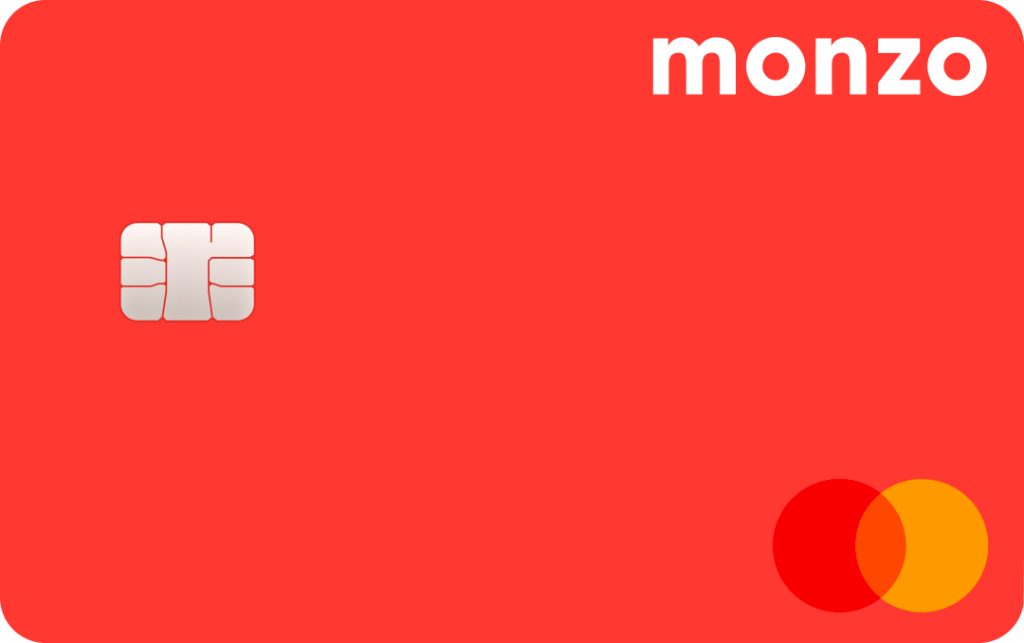
The interesting part is how the memory moved.
Hot Coral began with the card, then expanded across communications and campaigns. Monzo’s annual reporting describes its 2024 brand campaign as “painting the UK Hot Coral”, carrying an existing physical asset into mass communication.
This is how distinctive assets compound. A brand creates recognition when the same memory is refreshed across different situations without becoming monotonous. The exact execution changes; the underlying cue keeps earning interest.
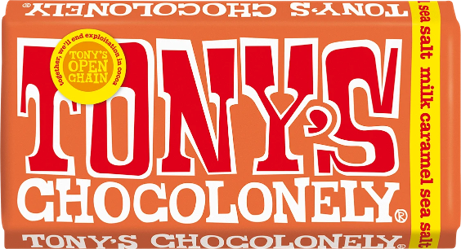
Tony’s Chocolonely offers a different kind of memory. Its brightly coloured packaging is recognisable, although the more interesting asset sits inside.
The chocolate bar is divided into unequal pieces. Tony’s explains this as a physical representation of inequality within the chocolate industry. That turns purpose into a product detail.

The company’s concern with exploitation in cocoa supply chains shapes sourcing principles and business behaviour. The brand then makes that concern tangible through a bar customers literally break apart.
This is Brands with a Conscience in miniature -talking about the chocolate bar-:
The unequal pieces work because their meaning belongs to the company’s wider behaviour. Remove that relationship and the device becomes a quirky mould.
Keep the relationship and a product feature becomes a mnemonic for the organisation’s point of view.
That is the difference between being distinctive and being distinctive with meaning.

Streaming services usually compete by promising abundance… MUBI has built much of its identity around judgement.
Its proposition combines streaming, distribution, carefully selected films, MUBI GO and Notebook. The common thread is curation: somebody has made choices.
That becomes particularly interesting in an age when content generation tends towards infinity.
When supply becomes effectively limitless, selection acquires value.
MUBI’s brand memory therefore comes partly from what it chooses to include and, by implication, what it leaves out. Its business model, editorial behaviour and brand reinforce the same idea: cinema benefits from taste, context and human judgement.
This echoes the human premium we explored earlier in this series.
AI can generate options, but judgement decides which deserve attention.
There is a curious trap hidden inside generative efficiency. A company can dramatically increase its volume of content while reducing its mental footprint:
Yet if each execution reaches towards the statistical centre of the category, the organisation gradually teaches people less about who it is.
The content expands while the brand contracts.
This is why the debate around AI and branding should move beyond whether AI can write good copy or produce good images. Increasingly, it can.
The strategic issue is whether the accumulated output builds memory that belongs to one brand. Efficiency without distinctiveness creates inexpensive invisibility.
That is quite an achievement, although perhaps not one worth putting in the annual report.
This is where the Brand as Operating System becomes useful. As an OS, it establishes the shared logic connecting company principles, business strategy, brand meaning, behaviours and experiences. It gives people criteria for deciding what belongs to the brand and what merely looks -living principles, assets, examples and governance-.
The brand understood as OS provides a powerful foundation for AI-enabled creation.
AI can then generate alternatives inside a system rather than beginning each task from the statistical average of the internet.
It can explore more directions, adapt formats, test expressions, and increase production while the organisation continues to protect its meaning, distinctive assets, and decision criteria.
This is the real opportunity. Use AI to increase variety around something recognisable, rather than using it as a factory churning out endless imitations of others’ work.
The aim is coherent diversity.
Brand memory also gives Ambidextrous Branding a very practical role.
Distinctive assets require repetition and time. Constant reinvention destroys part of the investment that created recognition in the first place.
Markets, technologies, and cultures also change. Repeating yesterday forever eventually turns distinctiveness into nostalgia.
The ambidextrous task is to separate what deserves continuity from what deserves development:
Monzo can keep Hot Coral while changing campaigns, Nothing can evolve its devices while retaining a recognisable design philosophy, MUBI can expand into theatrical distribution or publishing while preserving curation as an organising idea, and Tony’s can develop products while continuing to make its sourcing position visible and tangible.
Continuity creates memory, development keeps the memory useful, and the two belong together.
There is yet another complication. A brand may be memorable for the wrong reasons, which means that uniqueness alone cannot provide a comprehensive strategic solution.
This is where Brands with a Conscience becomes relevant. If memory is an asset, leaders have some responsibility for deciding what they want that asset to contain.
A company can pursue attention at almost any cost. It can provoke, simplify, exaggerate, or manufacture controversy. Some of those approaches may generate impressive recall.
A stronger brand asks a wider question: what do we want people to remember because it represents something true and useful about the value we create?
That brings value, results and impact together:
Brand memory gains strategic depth when it compresses those three dimensions into something recognisable.
The strongest memory is then more than fame; it becomes reputation.
There is also a second audience.
Earlier in this series, we argued that branding increasingly serves people and AI, although their roles are very different:
A strong brand therefore needs two forms of availability.
These two forms increasingly reinforce one another.
Strong, repeated brand meaning leaves public traces. Products, experiences, language, reviews, behaviours, structured information and third-party evidence help AI systems identify what a company is associated with.
At the same time, AI-mediated discovery can place a brand into consideration before somebody encounters its own communication.
Memory and machine legibility are becoming neighbours, and this makes coherence even more valuable.
Generative AI will continue to become more capable. That’s good news.
Brands will be able to explore more ideas, adapt faster, test more intelligently and produce at a scale that would have been absurdly expensive only a few years ago.
The strategic response should capitalise on that capacity and also recognise what the capability makes scarce:
At Allegro 234, we see the opportunity through the same connected system that has run through this series:
AI can amplify the system. Human judgement gives it direction.
Because when almost everything can be generated, the advantage is no longer having something to say. It’s owning something people can remember.


Imprint | Privacy | Copyrights | Cookies
 English
 Spanish