
Brand and Demand | How Ambidextrous Brands Build Tomorrow While Selling Today
Brand builds memory while demand creates momentum. Ambidextrous growth connects today’s performance with tomorrow’s preference.


A long history can be an extraordinary competitive advantage; however, it can also become a very subtle way of becoming stagnant.
Companies that have survived several generations often possess assets that younger businesses spend years trying to acquire:
The temptation is understandable. When something has survived for a century, management may conclude that its longevity proves the wisdom of preserving it exactly as it is, but history suggests something rather different.
The companies that become enduring institutions survive because they become very good at understanding which parts of themselves should remain and which need to change, and that is the strategic value of legacy.
Legacy should provide criteria for the future, rather than instructions for repeating the past.
The date of foundation may look impressive when presented on a gold-leaf plaque, although its strategic significance remains debatable.
Heritage and legacy are closely related, but:
This distinction immediately moves the conversation beyond communications:
Some of them deserve protection, others a reinterpretation, and others have served their useful purpose for humanity and can be retired with dignity. The strategic task lies in knowing how to distinguish between them.
Sometimes, brands act as if the mere fact of surviving automatically entitles them to remain relevant in the future.
This is not necessarily the case. A company founded two centuries ago has achieved something worthy of respect, but that does not mean its customers in 2026 do not have the right to ask why they should care.
Research into brand heritage increasingly treats heritage as a resource whose value depends upon how it contributes to identity, sincerity, differentiation and adaptation. Recent academic work describes heritage as a bridge between past and future rather than simply a record of historical continuity.
That bridge matters because accumulated meaning can reduce one of the largest costs businesses face when they move forward: the need to explain themselves from scratch.
Therefore, legacy behaves in much the same way as capital. It has been accumulated gradually and, if invested wisely, can generate returns in the future.
This sits naturally within Ambidextrous Strategy. Every established company faces two simultaneous responsibilities: preserving the elements that continue to create value and developing the capabilities, businesses and brands that will keep it relevant.
Here, the difficult word is “continue”.
Something should be preserved because it still contributes meaning, trust, knowledge, distinctiveness or competitive advantage. Longevity alone is a rather weak selection criterion.
This requires leadership teams to identify different kinds of legacy:
Corporate archaeology can be fascinating; however, avoiding its automatic transformation into strategy is essential.
It pains me to say it, but that’s the way it is: legacy predates branding by far. To pick up on what I’ve already said, and although I may be repeating myself, I think it’s worth saying:
The brand therefore carries legacy, although it should never be expected to manufacture one retrospectively because the marketing team has discovered an appealing photograph of the founder.
This is particularly important during transformation. If the company understands what should endure, the business gains criteria for deciding what can change. The brand can then preserve enough continuity to remain recognisable while expressing the organisation’s next chapter.
Without that clarity, heritage becomes vulnerable to two extremes: preservation for its own sake or transformation that destroys valuable meaning in the enthusiasm to look contemporary… Both can be expensive.
Guinness offers a useful example because its heritage stretches back to 1759 and remains visibly connected to St James’s Gate, the pour, the colour, the glass, the taste and a series of rituals that have accumulated meaning over generations. Yet the business has continued to innovate around that centre.
Guinness 0.0 took four years of development to reproduce key characteristics of Guinness without alcohol. MicroDraught addressed a different problem, allowing draught Guinness to be served in venues where traditional keg and line systems were impractical. The company has simultaneously expanded partnerships and cultural presence while continuing to treat the core product experience as recognisably Guinness.
The interesting point is the direction of innovation. The company can develop new formats, technologies and occasions because it understands what people expect Guinness to remain:
This sounds paradoxical until one considers design. A blank page contains infinite possibilities and remarkably little guidance. A clearly understood brand provides boundaries within which innovation can become more distinctive.
Heritage becomes useful when it answers the question: what must remain true even when almost everything else changes?

Legacy can also reside in apparently modest brand codes. New Balance’s relationship with grey began as a practical product choice in the 1980s, when the colour suited urban running environments dominated by concrete and asphalt. Over time, grey became a recognisable part of the brand’s design language.
The company’s annual Grey Days now turns that historical choice into a contemporary platform through products, athletes, ambassadors and experiences. At the same time, its Made in USA and Made in UK programmes maintain manufacturing and craftsmanship as part of the company’s identity while new silhouettes, collaborations and performance technologies continue expanding the business.
Here, heritage avoids becoming costume because the brand code keeps moving.
Grey is recognisable without requiring every shoe to look as though it escaped from 1987.
This is an important lesson for branding. Distinctive assets accumulate value partly through repetition, yet repetition does not require literal replication. Colours, symbols, materials, forms and verbal codes can retain memory while acquiring new expressions.
The challenge is to identify what people recognise beneath the expression. That is what deserves continuity.

Sometimes the problem is more structural. Morphy Richards was founded in Britain in 1936 and built substantial recognition in home appliances. By the early 2020s, however, elements of that British heritage had also become associated in some markets with a brand perceived as dated and lacking imagination.
The subsequent repositioning broadened the idea from “Smart Ideas for Your Home” to “Smart Ideas for Your Life”, creating a platform designed to support international expansion and product development over the following three to five years. Crucially, the refreshed positioning was intended to influence product planning rather than ending with a new visual identity. That distinction matters.
Heritage brands often respond to ageing perceptions with cosmetic modernisation. The logo becomes cleaner, the photography acquires younger people and everybody congratulates themselves on having transformed the business before returning to the same product roadmap.
A productive brand transformation works further upstream. It identifies the valuable truth inside the legacy and gives that truth a contemporary job.
The brand then helps guide innovation, experience and portfolio decisions, connecting accumulated credibility with future ambition.
This is where branding becomes strategically useful to the business.
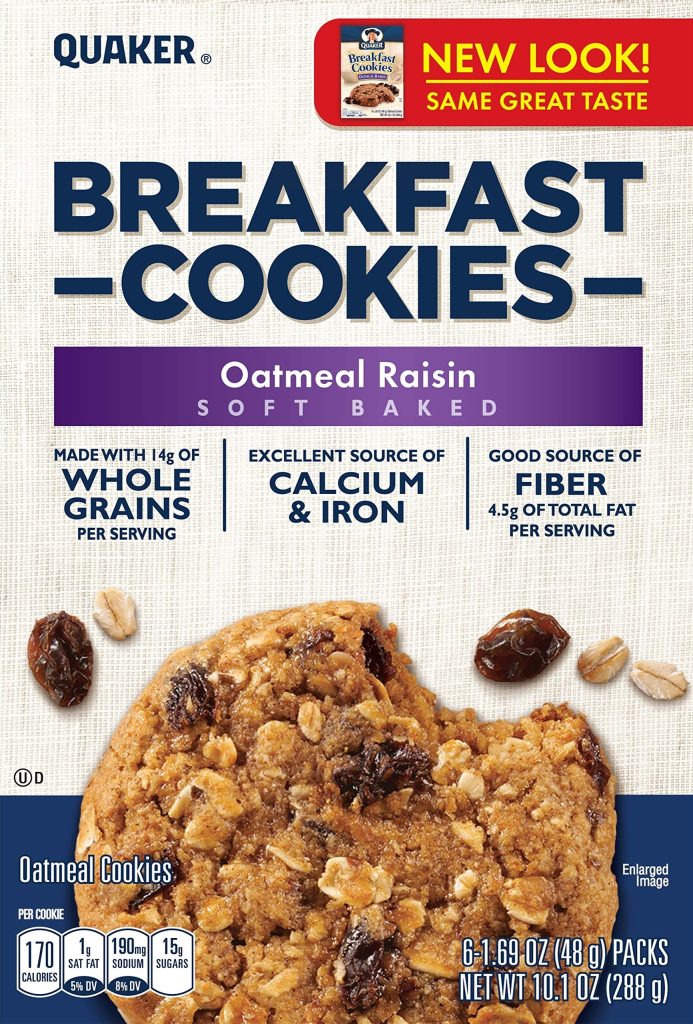
Quaker offers another variation. Founded in 1877, the brand possessed enormous familiarity and clear associations with oats and breakfast. The difficulty was translating that heritage into changing eating occasions and competitive conditions.
Work around the “Embrace Everyday” platform reframed the brand around everyday positive moments and provided a basis for product innovation rather than relying purely on communications. The resulting Breakfast Cookie generated $50 million in first-year sales, while the wider bar programme moved from decline to reported growth within eighteen months.
Quaker’s legacy remained relevant because it could be translated into a broader contemporary occasion without requiring the brand to deny where it came from:
This three-step relationship is useful for many established brands:
When those questions are answered in sequence, legacy can become a growth platform. When the sequence begins with “What could we launch?”, product innovation has a habit of wandering into interesting places.
The difference between a museum and a living brand lies partly in how the organisation uses its history:
This is why legacy becomes particularly powerful when expressed through principles rather than catalogues.
A company with a strong legacy should be able to identify the principles behind its most valuable historic choices. Perhaps it has consistently prioritised engineering simplicity, durability, hospitality, craft, independence, accessibility or a particular relationship with customers.
Those principles can then guide products, partnerships, technologies and experiences that did not exist when the company was founded.
This is precisely how a Brand Operating System helps transform history into future capability. Shared meaning gives different parts of the organisation criteria for deciding what belongs, what stretches the brand productively and what would simply borrow historical decoration without carrying the underlying logic.
Heritage becomes an active decision system.
Let’s talk about the dark side of the moon: Transformation creates the desire to exhibit change dramatically.
This can lead companies to remove names, colours, symbols, packaging structures and other assets precisely because people associate them strongly with the past. Do you remember Jaguar? -without making any harsh judgements about it… Please!-

Yet recognition is one of the things legacy brands have spent decades purchasing.
Current branding thinking increasingly emphasises the commercial risk of discarding recognisable assets without understanding the memory, trust and navigation they carry. Familiar cues may appear ordinary to executives who see them every day while remaining valuable shortcuts for customers making decisions in crowded markets. This means understanding what customers actually use to recognise the brand before deciding what deserves transformation.
Sometimes the most intelligent modernisation is remarkably selective.
An ambidextrous brand distinguishes between continuity of meaning and repetition of expression.
That ambidextrous distinction allows change to feel recognisable rather than arbitrary.
The idea of permission is particularly useful when thinking about future growth. Strong brands accumulate permission over time.
Customers may give them permission to enter adjacent categories, develop new services, charge premiums, experiment with formats or behave in ways a newcomer could not immediately sustain.
But that permission has boundaries. A legacy brand can stretch when the new proposition remains connected to capabilities, meaning or relationships that people recognise. The further the organisation moves from those sources of credibility, the more explanation and evidence it requires.
This is why heritage cannot become an excuse for endless extensions. A long history does not grant universal jurisdiction over every attractive growth category presented in the annual strategy retreat.
While business strategy determines whether the opportunity deserves pursuing, brand strategy helps define where permission exists. The two should talk to each other occasionally.
There is another dimension that takes on greater significance once we understand the concept of legacy at a business level. Organisations inherit legacies and, in turn, create them.
Leadership is therefore faced with a second question, in addition to what we should preserve from our past:
“What are we building that deserves to be inherited?”
This is where legacy connects with Businesses, Leaders and Brands with a Conscience.
Purpose, values and principles acquire significance through the decisions a company repeats over time. Relationships with employees, suppliers, communities and customers become part of the organisation’s accumulated reputation. Environmental and social consequences also enter the record, whether the annual report devotes a tasteful spread to them or not.
A living legacy therefore includes the quality of value the company leaves behind.
Conscience introduces criteria for judging that value across commercial, human, social and environmental dimensions. It encourages companies to consider which behaviours should become part of their future inheritance and which deserve ending with the current generation of management.
This makes legacy forward-looking almost by definition. The company is always creating part of tomorrow’s heritage through today’s decisions.
Legacy therefore requires considerably more judgement than nostalgia suggests.
Leaders need to distinguish meaning from habit, distinctive assets from decorative history, valuable capabilities from obsolete routines and enduring principles from methods developed for circumstances that disappeared years ago.
This is also why an ambidextrous strategy proves particularly useful for established companies and brands.
Preserve what matters. Develop what comes next.
The simplicity of the phrase conceals a demanding management task because both verbs require choices:
The objective is a productive creative tension: enough continuity to compound trust, memory and knowledge; enough development to create new forms of value, relevance and growth. The result is continuity with movement.
Brands with a legacy have an advantage that younger companies cannot quickly acquire: time.
Time can create memory, authority, expertise, trust, symbols, relationships and knowledge. It can also generate inertia, assumptions, organisational complacency and an impressive collection of phrases beginning with ‘we’ve always…’
That is why legacy, as I mentioned earlier, is an asset and not a museum. Museums preserve objects because their value lies –in part– in remaining connected to another era; companies have a different responsibility: they must take what time has given them and make it productive once again.
This is one of the central dilemmas addressed through Ambidextrous Strategy and Ambidextrous Branding: identifying what gives the company, business and brand their enduring value, then using those assets as the platform from which future relevance can be built.
Because the strongest legacy is what the past enables you to create next.



Imprint | Privacy | Copyrights | Cookies
 English
 Spanish