

Brand as Operating Systems | How Brands Guide Strategy, Decisions, and AI
A Brand Operating System turns company principles, business strategy and brand meaning into coherent decisions, behaviours and experiences.

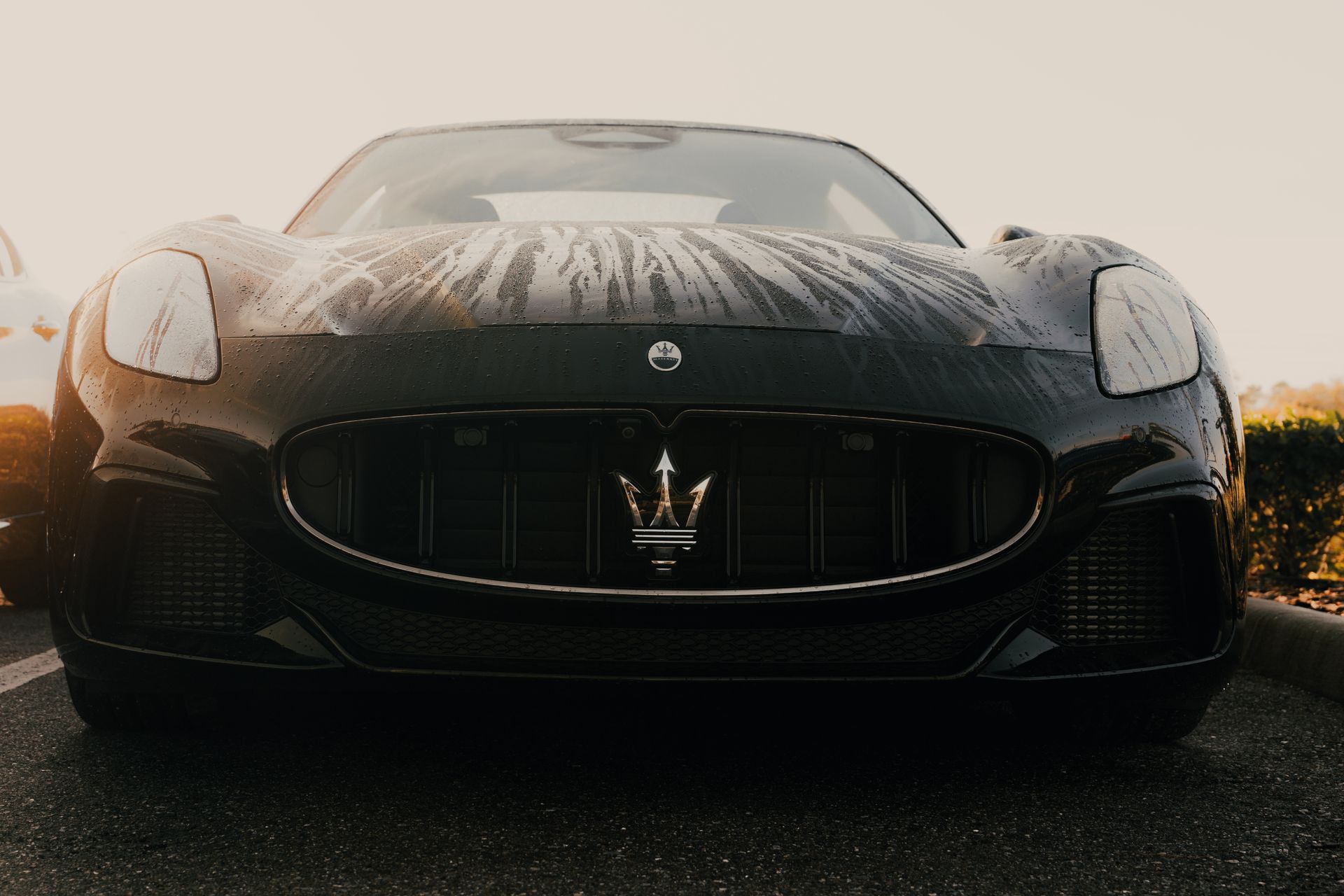
Above transportation, Italian luxury motoring brands sell theatre, engineering, beauty, speed, sound, mythology and a socially acceptable excuse to discuss carbon fibre over dinner.
Their legacies are built around founders, racing, workshops, distinctive design, Italian places and mechanical character.
Yet the sector is entering a profound transition. Electrification, software, autonomous systems, regulation and changing ownership models are altering the product itself. Some traditional sensory cues engine note, gear changes, vibration and mechanical complexity may become less central or disappear entirely.
This creates an ambidextrous challenge; the brands need to preserve the meaning of their heritage without assuming that every historical expression must remain unchanged.
The question that arises is whether, in such a turmoil-ridden context, these brands still convey the unmistakable impression that they have been created by the same company.
At company level, Italian motoring heritage includes:
These capabilities should guide investment in electrification, software, materials and new mobility services.
The transition cannot be managed solely as a technical substitution. Replacing a combustion engine with a battery is engineering.
Translating the brand’s emotional and cultural value into that new system is strategy.
At business level, heritage can support:
The business opportunity extends beyond selling new vehicles. For companies with strong histories, the existing fleet, archive and community can become valuable long-term assets.
Ducati is probably the best example of how to capitalise on one’s legacy
The brand is experienced through:
Ambidextrous Branding requires distinguishing between the expression and the underlying meaning:
If the expression changes, the meaning must still survive.
The road cars, Formula 1 activity, factory and historical models form one connected world.
Ferrari Classiche extends that world through certification, restoration and preservation.
Legacy is therefore both emotional and operational.
Polo Storico now protects documents, restoration knowledge and authenticity.
The brand preserves the ‘Countach’ merely as an old model using it as a continuing design and cultural reference.
It connects Bologna, mythology, competition and grand touring in one sign.
The challenge is to make elegance, audacity and Italian character tangible in new technologies and ownership experiences.
Its founder philosophy is visible in both product and process.
Innovation does not threaten the craft. It is one of its principal expressions.
Technology developed through competition moved into road motorcycles.
World Ducati Week turns this heritage into a living community ritual connecting historical models, current riders and future products.

Its racing achievements and handcrafted approach continue to inform contemporary limited editions and bespoke models.
Heritage becomes a method for creating, not merely a graphic placed on the fuel tank.
Every company must decide what customers genuinely value. Is it…
Some elements can be preserved literally, others must be translated.
The future Ferrari may not reproduce every historical mechanical sensation, but it must still create anticipation, precision, drama and performance. A future Ducati may use different propulsion, but it must still feel agile, expressive and connected to its riders.
Ambidextrous Strategy makes this translation explicit.
There is a temptation to respond to technological change with artificial heritage:
Some of these may be valuable, but simulation becomes dangerous when it replaces genuine innovation.
The task is to ensure that the future carries the same underlying character. Otherwise, a company may preserve the noise and lose the music.
Companies should ask:
The final distinction matters. Heritage should create character, not fancy dress.
Italian luxury motoring brands possess extraordinary cultural and technical assets. Their future will be secured by protecting every inherited mechanical solution -understanding why those solutions mattered-.
The strongest companies will preserve engineering ambition, design confidence, drama, community and emotional intensity whilst developing new propulsion systems, materials, services and experiences.
They will translate and reinterpret their past, and, ideally, they will do so before someone decides that installing an even larger screen constitutes a complete mobility strategy.
This article is part of Legacy with a Future, a five-part series exploring how traditional companies can preserve what makes them distinctive whilst building the capabilities, businesses and brands they will need next.
The articles will be published progressively:
How wineries can protect land, time, family knowledge and provenance whilst responding to climate change, changing consumption and new generations of drinkers. The article looks at Château Margaux, Vega Sicilia, Familia Torres and Catena Zapata, among others.
How luxury maisons can preserve craft, mythology and creative authority whilst evolving their materials, cultural relevance and business models. Drawing on Philippe Mihailovich’s thinking about luxury and maisons, the article explores Hermès, CHANEL, Dior, LOEWE and Prada, among others.
What traditional watchmakers and smartwatches can learn from one another about permanence, service, personalisation and our changing relationship with time. The article considers Patek Philippe, Rolex, OMEGA, Apple Watch and Samsung Galaxy Watch, among others.
How Italian luxury car and motorcycle companies can carry racing, design, craftsmanship and emotion into an electric and software-defined future. The article examines Ferrari, Lamborghini, Pagani, Ducati and MV Agusta, among others.
How spirits brands can turn origin, production knowledge and social rituals into relevant experiences without diluting their distinctive character. The article features Lagavulin, The Macallan, Hennessy, Campari and Jose Cuervo, among others.
Imprint | Privacy | Copyrights | Cookies
 English
 Spanish